This summer, I had the privilege of joining 200 educators, thought leaders, service providers, and inclusion advocates at the Maryland Coalition for Inclusive Education 2024 Summer Institute. We spent two days learning, listening, sharing, and reenergizing each other about the future of inclusive education.

I was particularly proud to be one of 40 members from Carroll County in attendance—20% of the total participants were from my community. This speaks volumes about our commitment to inclusion, yet it’s clear we still have much work ahead.
Student Voice
One of the highlights of the time was hearing from Jordyn Zimmerman, chair of the Board of Directors of Communication First. Jordyn shared her experience as a nonspeaking autistic learner, educator, and advocate and the profound difference effective communication made in her life.
Jordyn addressed the misconception that minimal speech equals minimal thinking. She emphasized that people with disabilities can be socially included yet still feel isolated without genuine inclusion in the community.
This was a strong reminder: We must prioritize the voices of those with disabilities, especially those with complex communication needs. Are we, as educators and parents, truly considering the perspectives of the students we serve? Are we empowering their voices and ensuring they have effective communication strategies? Jordyn’s message was clear:
“Everyone can learn. Relationships are powerful. Presume competence. Listen to disabled people. Be that person. Advocate for change.“
Expectations
Andratesha Fritzgerald, founder of Building Blocks of Brilliance LLC, spoke about expectations, challenging us to consider whether we are not only setting high expectations, but additionally if we are truly building and investing in our youth and checking back to see what they have become. She said they should be hearing the message,
“In you is greatness. Before you is uncertainty. You have in you what it takes.“
This message applies to educators as well. Lisa Quin, executive director of Reach Every Voice, said during her session,
“We need to make it okay to be a teacher who doesn’t know everything…We need to build a culture where school staff can acknowledge when they are wrong.”
I couldn’t agree more. We need to create environments where educators can admit knowledge gaps, seek guidance, and embrace the process of trying, failing, and learning. If we expect inclusion to be the norm (and we do), we must communicate to educators that they have what it takes, and we need to provide the tools and training for them to succeed.
I’ll add that this was one discussion item of Lisa’s thought-provoking and informative presentation on inclusion and text-based multimodal AAC.
Andratesha also spoke about power and how we use it, how we share it, and how we honor it. She challenged the audience to evaluate power-filled choices and the implications of the use of power. “Are we sharing the power to honor each learner?” she asked. She said that power plus limited vision equals stereotype.
The Time for Change is Now
Carol Quirk, MCIE’s director of special projects, gave an impactful presentation on facilitating systems change—a topic particularly relevant to the CCPS district inclusion committee I’m part of. Carol stressed that we can’t wait for a mindset shift to implement necessary changes in policy or procedure. While culture and mindset work are vital, some changes must happen now to benefit the students currently in our schools.
Jennifer Sommerness, a researcher from the TIES Center, led a session on customizing the role of paraprofessionals and discussed systemic ways to engage these professionals—who have the most contact with our students and arguably the most impact on inclusion—in overarching learning components. “Systems change is really conversations over time,” she noted.
Moving Beyond Inclusion to Belonging
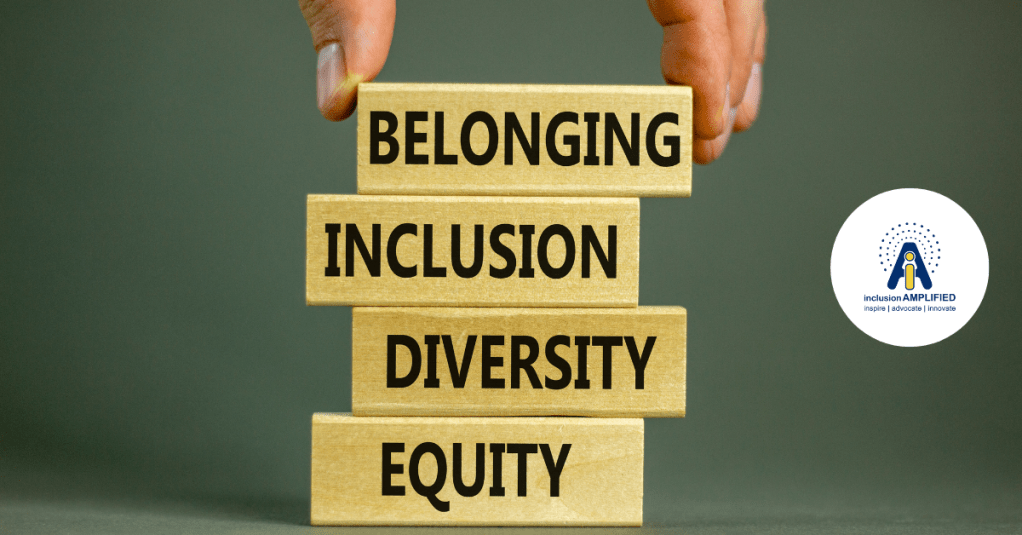
Jennifer Sommerness also gave a presentation on the shift from inclusion to authentic belonging. She spoke about the transformative power of belonging and how much learning is impacted once that is in place. Jennifer challenged educators to reconsider unequal buddy programs and roles schools establish and provided actionable steps, tools, and guides for authentic peer relationship implementation.
She left us with a powerful reminder: We must persist in our efforts to figure out what works for each student concerning inclusion.
“Over, under, around, and through. You figure it out.”
Where Do We Go From Here?
After any conference or professional development opportunity, it’s easy to return energized, brimming with new ideas and good intentions. The challenge lies in translating what we’ve learned into systemic and impactful change in our students’ lives. I’m excited to continue this work with my fellow recovering radical inclusionists in the weeks and months to come.
Tim Villegas from MCIE recorded a live episode of the Think Inclusive Podcast during the event, so keep an eye out for that episode—it’s packed with valuable insights.
Whether you were at the institute or not, if you want to connect with me about this work, I’m always happy to talk inclusion with a fellow enthusiast. Contact me today.
Disclosure: inclusion AMPLIFIED provides communication consulting services to MCIE. All thoughts and opinions shared in this piece are those of Jill Wagoner.
 inclusion AMPLIFIED
Leave a comment