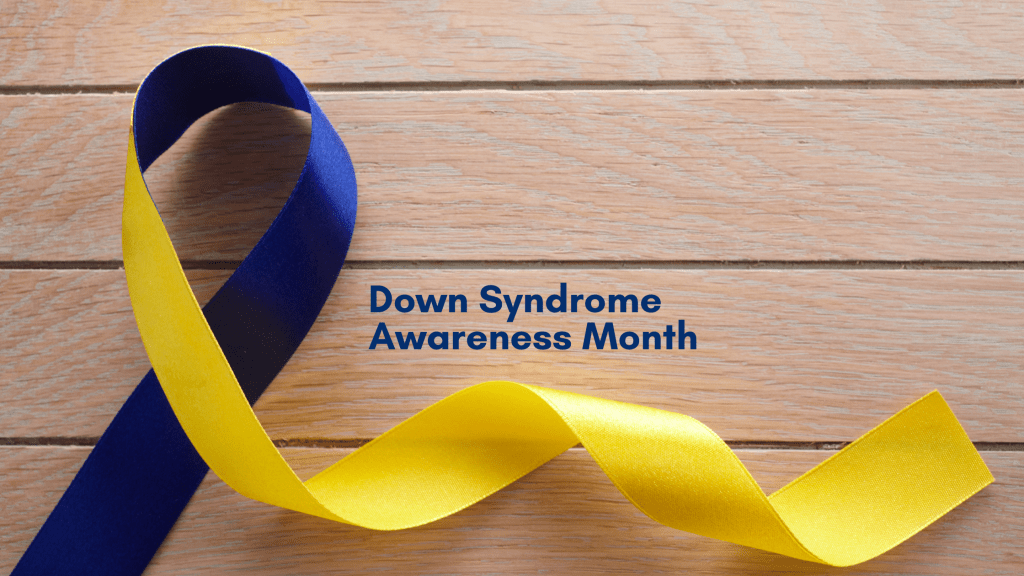
As I sip my pumpkin spice coffee—which, if you know me well, you know I enjoy 365 days a year—I am reflecting on what I want people to know about Down syndrome and inclusion during Down Syndrome Awareness Month. I am thinking about how little I knew 15 years ago, before my son with Down syndrome was born, and how many topics I could write about now:
- Facts and figures about Down syndrome
- Various angles on disability inclusion
- Belonging
- Presuming competence
I could go on, but today what weighs on my heart is this: What is our role as allies in the work of disability inclusion and to people with Down syndrome?
As my son settles into his freshman year of high school, I find myself surprised yet not surprised by how beautifully he’s doing. He’s learning, growing, and taking the initiative to try new things—like discussing the possibility of trying out for a JV sport he’s never played. He’s asking thoughtful and complex questions that blow my mind, and he’s self-advocating at a level that is new for him.
How is all this happening?
This is all possible because he believes he authentically belongs in his school, his church, his dojo, at the rink, and on the mat. It’s not necessarily because every space he’s occupied has welcomed him with open arms or that everyone he’s encountered has embraced true inclusion. Far from it. Rather, it’s because our family has never accepted someone telling him he could not do something or that he was not welcome. We have sought out inclusive spaces, fought to make the places where he wanted to be more inclusive, and walked away from environments that offered no hope for change.
So I return to two questions:
What do I want you to know about people with Down syndrome, and what is our role as allies in the work of disability inclusion?
This is not an original thought, but one shared many times within the community:
If you know one person with Down syndrome, then you know one person with Down syndrome.
While everyone is unique, in my experience, many individuals I know with Down syndrome are incredibly brave. It takes courage to exist in a world that often does not make space for you—where you may not always feel welcome or only receive acceptance unless you conform to certain expectations. It’s brave to navigate a world where systemic barriers often require extra effort and where segregation remains a challenge that many continue to advocate against.
I want you to know that people with Down syndrome are unique, that many I know walk through life boldly and fearlessly, and I deeply admire that strength.
So, what can we do?
Be a true ally.
What does this mean?
- Presume competence. Be someone who genuinely presumes competence, recognizing that every individual has unique strengths and potential that deserve to be acknowledged and nurtured.
- Foster authentic belonging. Be a friend who promotes true belonging. Don’t just volunteer for the buddy club and call it a day. If the person is your friend, include them in your everyday life as you would with any other friend.
- Speak up. If you hear someone making derogatory remarks about disability, speak up. It may seem small, but your voice can make a significant difference.
As we celebrate Down Syndrome Awareness Month, let’s commit to being allies who foster a world where everyone is included and valued. Together, we can amplify the voices of those with Down syndrome and create spaces that celebrate their unique contributions.
 inclusion AMPLIFIED
Leave a comment