
All through elementary school, my daughter, who is currently 10, has given a presentation during Down Syndrome Awareness Month to her class.
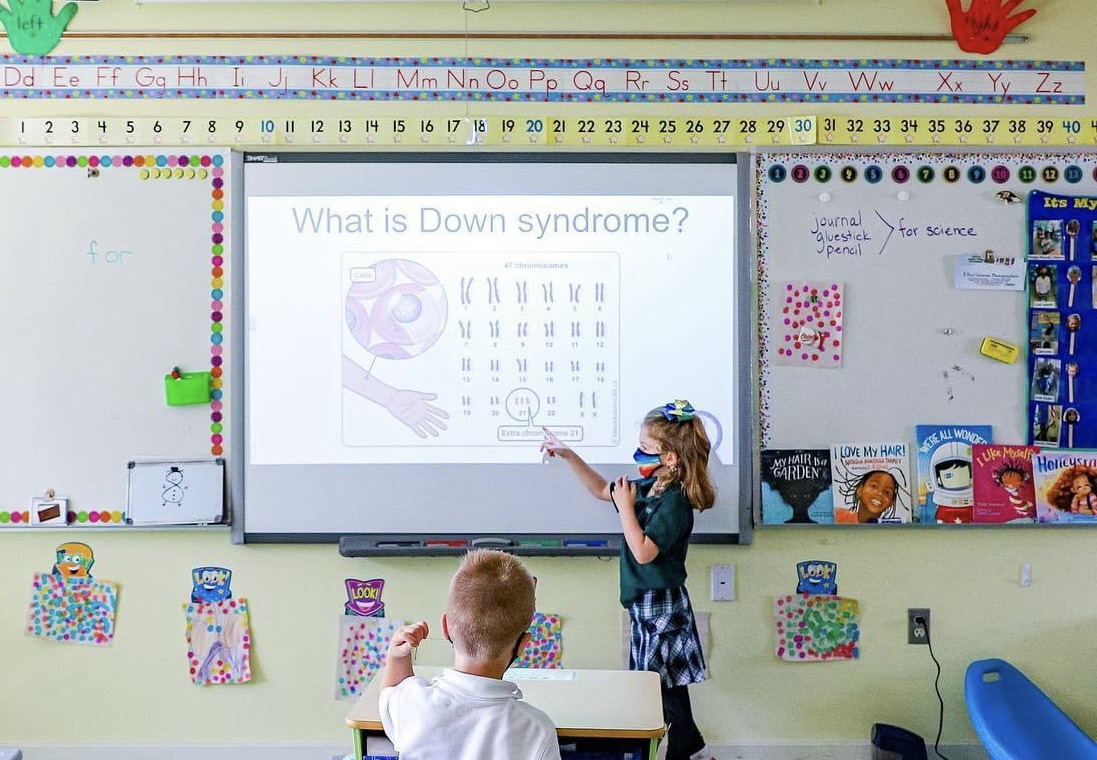
Photo credit: Wilson Freeman
Each year, the content has evolved as her understanding and perspective have grown, allowing her to share her lived experience as a sibling of a person with a disability and emphasize the importance of inclusion and belonging.
Talking with children about disability inclusion is powerful because it fosters empathy, promotes acceptance, encourages diversity, builds confidence, enhances social skills, and prepares them for a diverse world. These discussions shape attitudes and behaviors that can last a lifetime, influencing how children approach diversity in their future careers and communities.

Through building the presentation each year, my daughter has learned about new trends, news, and larger concepts around disability. This empowers her to advocate for her brother’s needs, teaching her to be an effective ally and supporter. It also opens conversations that help normalize disabilities, reducing stigma not just at home but in wider social circles. These discussions improve family dynamics and support by fostering effective communication about disabilities.
For her peers, the discussion creates an inclusive classroom environment where all students feel valued.
Last week, at the end of the presentation, one of my daughter’s classmates asked when it was that we recognized autism awareness and said that she had siblings with autism. I shared with her it occurred in April, and the teacher shared the school has an awareness effort during that time. How cool would it be if this child feels led to share her story with the class this spring?
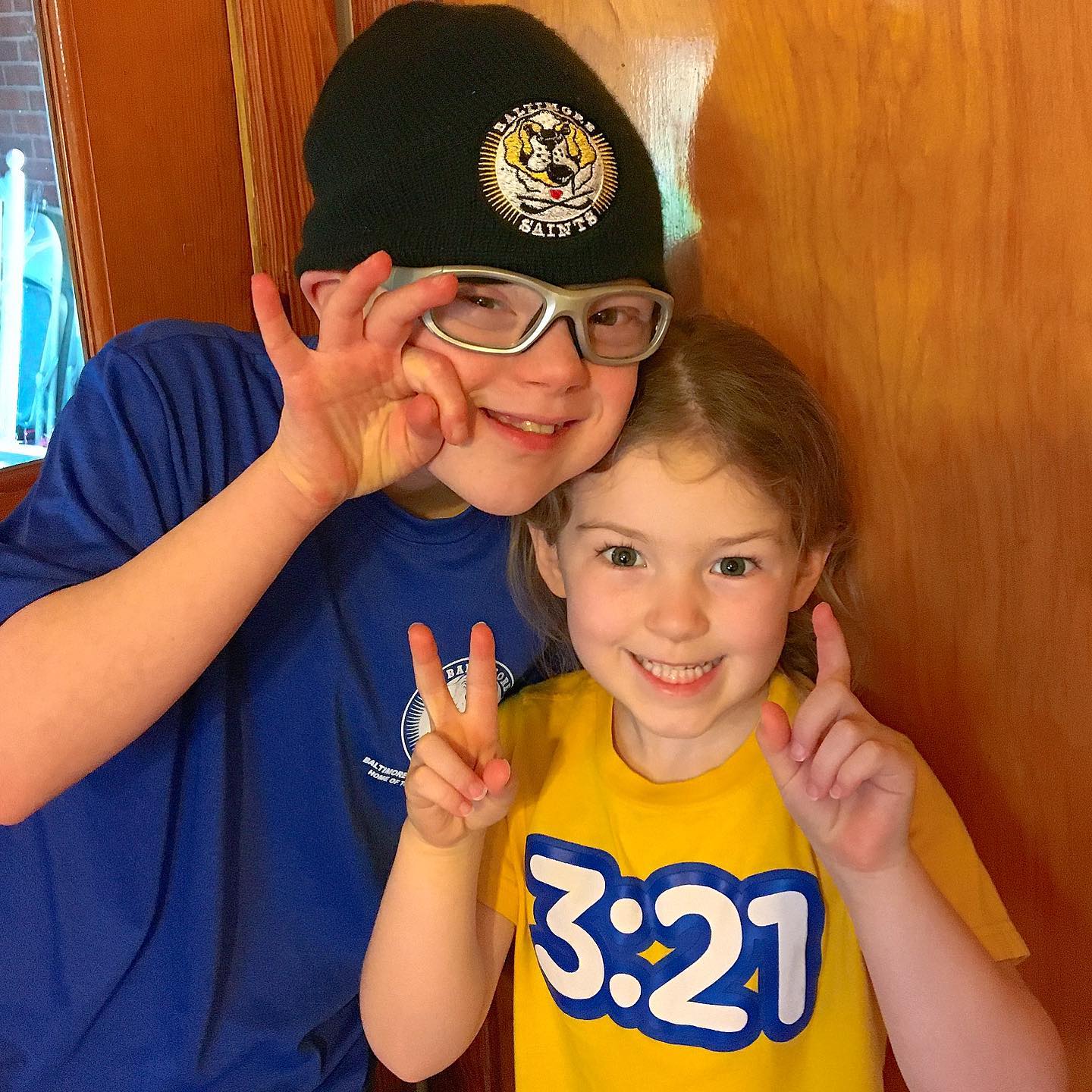
Allowing space for siblings or individuals to share their stories brings greater awareness that can decrease bullying and discrimination, promoting kindness and respect among peers. This type of discussion helps students learn about diverse abilities and encourages teamwork and collaboration as they appreciate different strengths.
Ultimately, these conversations broaden students’ understanding of the world, helping them become more informed and socially responsible individuals. By equipping siblings and peers with the skills to engage with individuals with disabilities, we can nurture a mindset of inclusivity that lasts a lifetime.

 inclusion AMPLIFIED
Leave a comment