
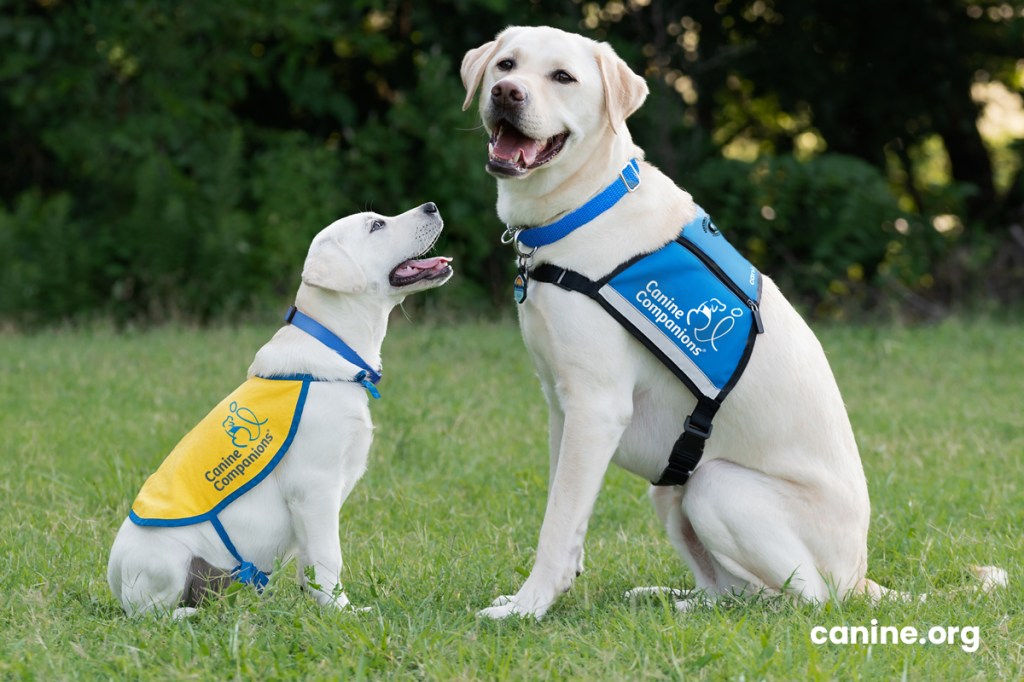
Service dogs can play a crucial role in supporting individuals with intellectual disabilities by providing both emotional and practical assistance in everyday life. These highly trained dogs help increase independence, promote confidence, and offer a sense of safety for individuals facing challenges related to cognitive, social, or behavioral functions. A service dog can assist with tasks such as providing reminders for daily activities, guiding the person through social interactions, and offering calming support during moments of anxiety or distress. Service dogs enhance the quality of life for those with disabilities, fostering greater inclusion and empowerment.
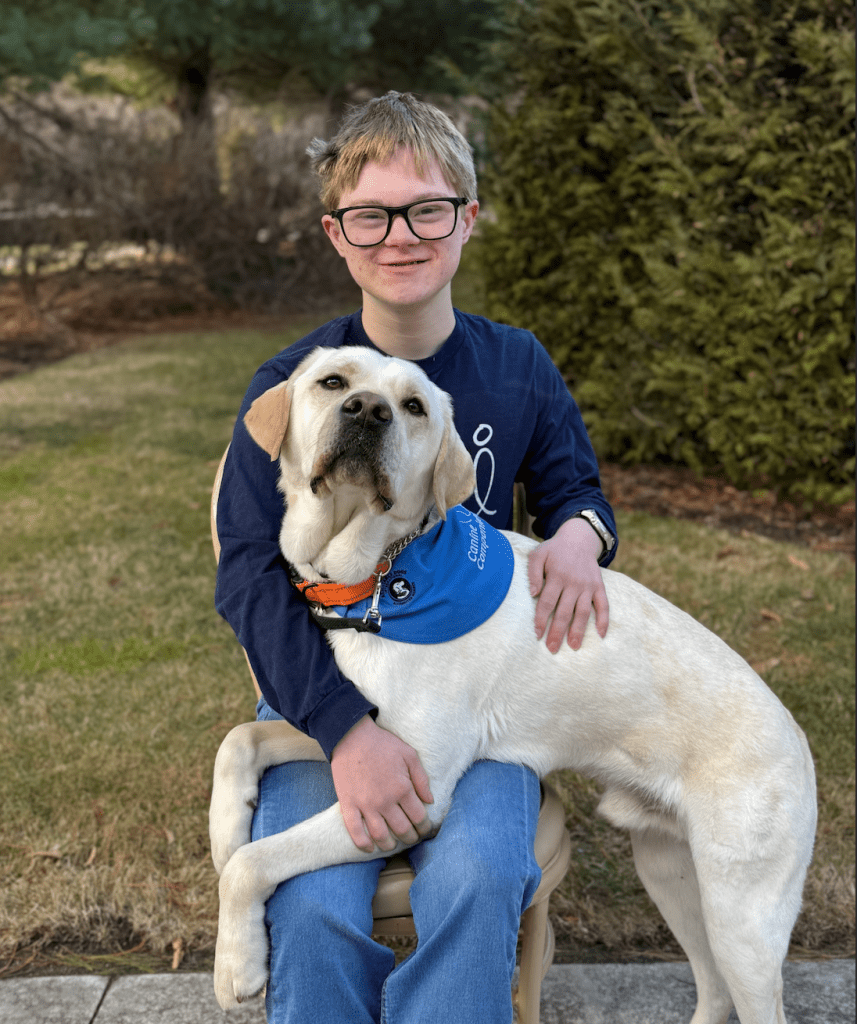
After much research, we found Canine Companions to be the best fit for our family for many reasons. Their thoughtful and thorough process means it takes time, but the wait was well worth it.
Graduation
Watch the February 2025 class Canine Companions Northeast Graduation Ceremony from Friday Feb. 7.
A few good things to know
The following guidelines have been written by Canine Companions. It is important to keep in mind that service dogs have an important job to do and to avoid distracting them. For the success of a working dog team, it is very important for the dog to always remain focused on their human partner. While the dog is working, please follow these basic guidelines:
- Always ask before you pet.
- Never feed a service dog.
- Limit your interaction with the dog.
- Do not let other dogs initiate interaction with a working dog.
Team Frisco’s Journey
Follow Cooper and Frisco Unstoppable on Instagram
Building Bridges: How Service Dogs Foster Social Connection and Inclusion
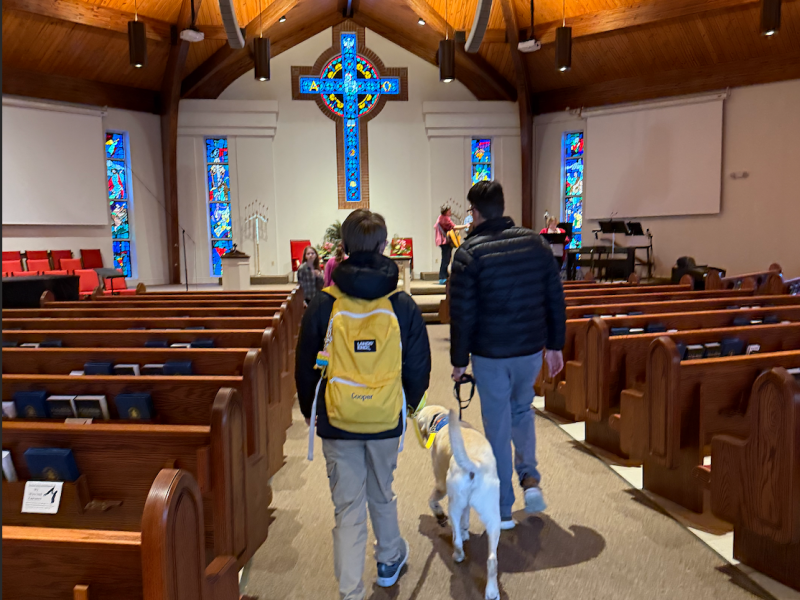
Research and experience have shown that service dogs can enhance social connection in numerous ways.

Graduation Day: A New Chapter Begins
The anticipation of graduation day felt like forever and overnight all at once. The ceremony marked not just an ending, but a beautiful beginning filled with tears, laughter, and profound gratitude. Twenty-eight puppy raisers bid farewell to their furry friends entering team training, while 11 others reunited with our class’s dogs to celebrate their transition…
The home stretch: Growing together in week two
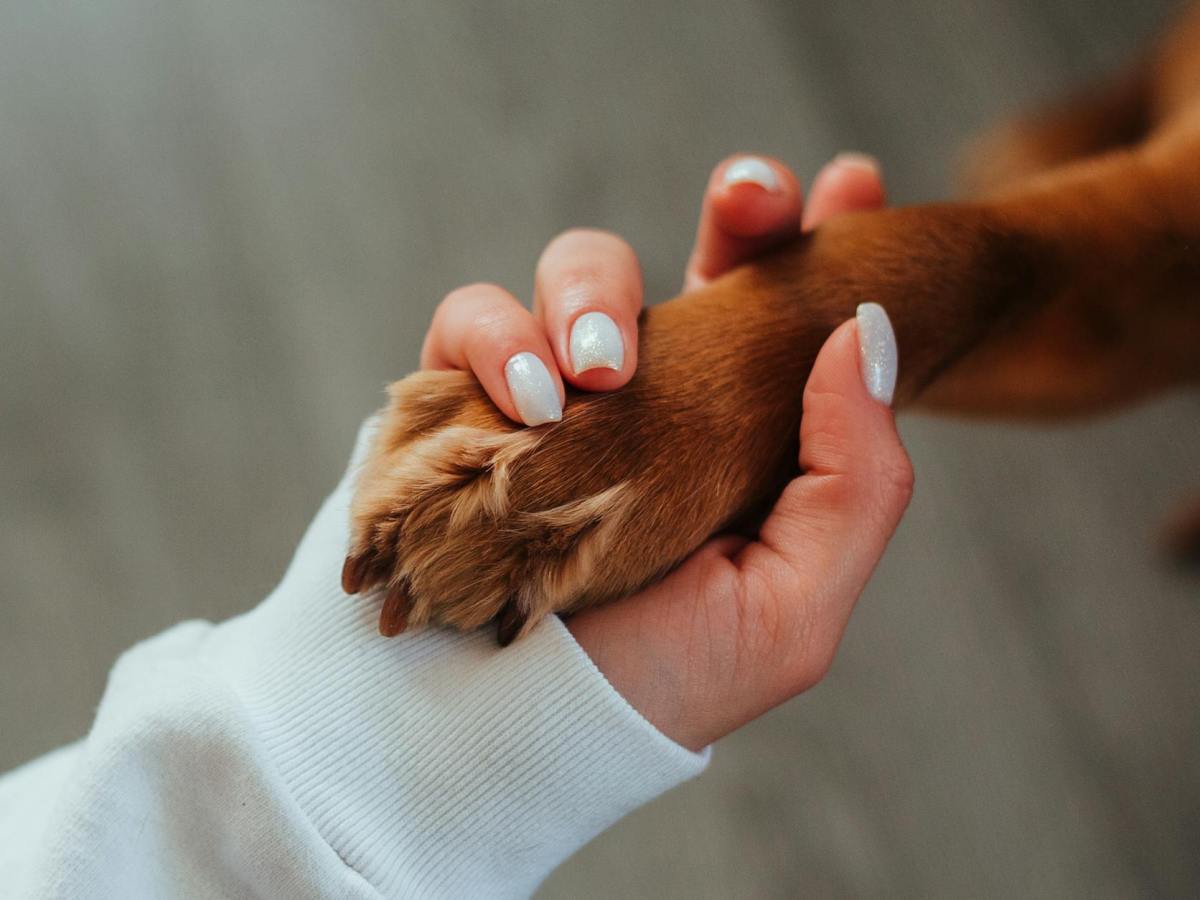
The second week has flown by in a whirlwind of practice, growth, and deepening connections. While week one focused on fundamentals, this week has been about putting those skills into action. Each team has found their rhythm, with handlers growing more confident in problem-solving and dogs responding with increasing trust and understanding.
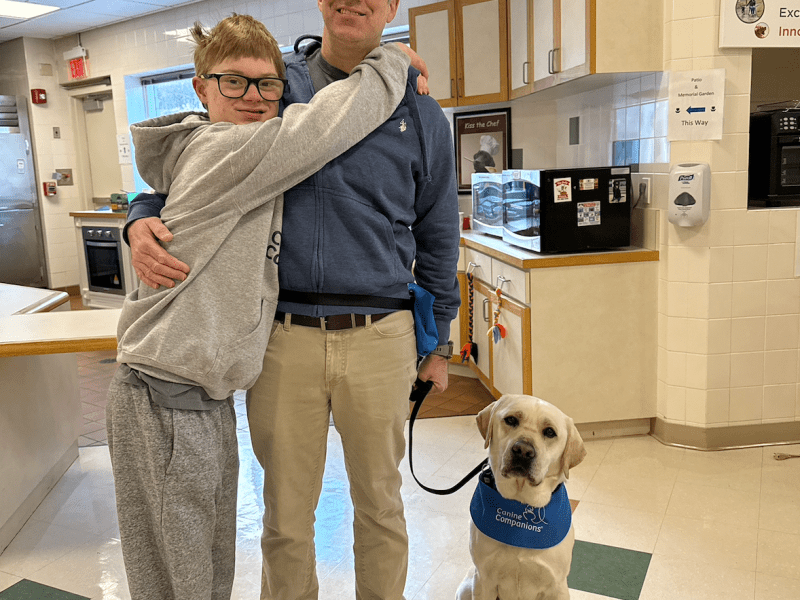
Weekend tails: Rest, play, and deeper connections
Our weekend brought a change of pace with a half-day of training followed by some much-needed downtime. After an intense week of learning and growing together, this break gave everyone – recipients, families, dogs, trainers, and staff – a chance to catch their breath and deepen our connections.
Something went wrong. Please refresh the page and/or try again.
 inclusion AMPLIFIED