
Student Profiles
IEP meetings can feel overwhelming, particularly when your child is young. Over the years, my family embraced a strategy to kick off these meetings with a student-centered approach: crafting a student profile. This means presenting a condensed but comprehensive overview of the child’s strengths, interests, and preferences.
From the earliest stages of his educational journey, we recognized the value of placing my son at the heart of the conversation. So we began integrating this approach into our IEP meetings, igniting discussions that revolve around his unique qualities and needs. Despite the novelty of this approach to some educators, we’ve found that most are receptive and even pleased with the idea.
As my son has grown, his involvement has grown too. What started as our initiative has evolved into a collaborative effort, with him actively contributing to the preparation and delivery of his presentation. Now, as a teenager, he is part of these discussions, sharing his achievements, aspirations, and goals with the IEP team.
Keeping the Discussion Student-Centered Versus Diagnosis Focused
A significant advantage of beginning IEP meetings with a student profile is its ability to shift the focus away from diagnoses. Rather than viewing the student solely through that lens, the profile provides a comprehensive snapshot of their unique strengths, interests, and preferences. By highlighting the individuality of the student, we move beyond the limitations of labels and stereotypes, fostering a more holistic understanding of their needs.
This shift in perspective promotes a more positive, strengths-based approach — and opens doors to creative solutions and personalized supports that might otherwise be overlooked.
Format Options
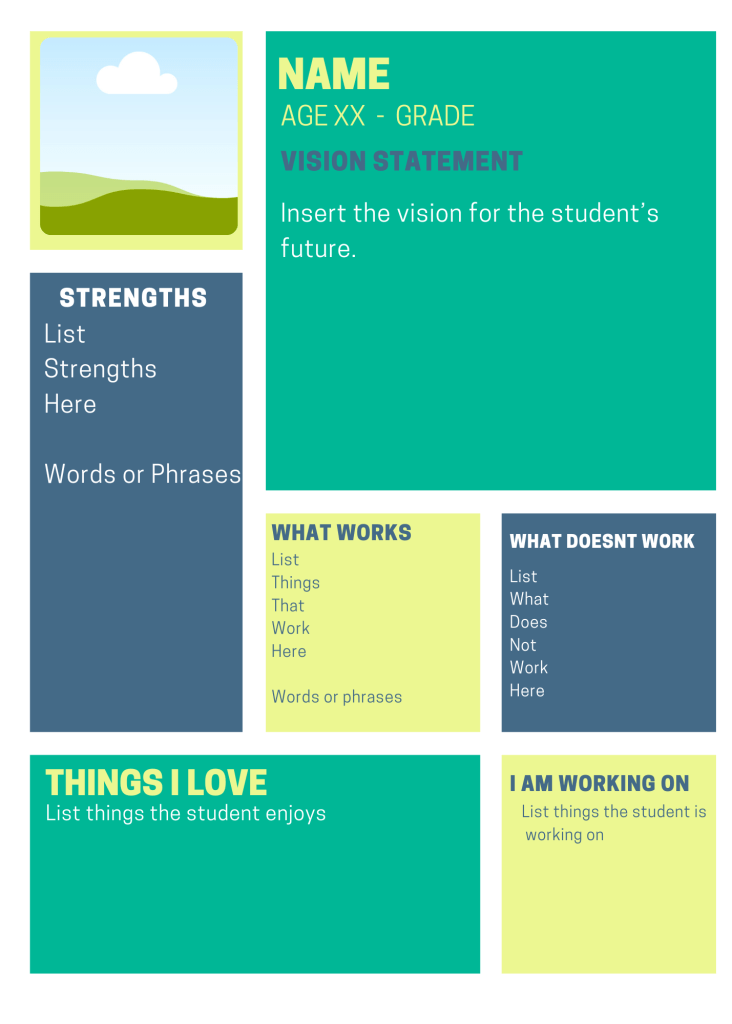
We’ve explored various formats to best suit the needs of our son and facilitate productive IEP meetings. From dynamic slide presentations, offering a visual narrative during meetings, to comprehensive open-page documents, serving as a reference throughout the school year, each format has played a vital role in highlighting our son’s strengths, interests, and preferences.
- Slide Presentation: Ideal for the meeting itself, providing a visual representation of the student’s strengths, interests, and preferences.
- Open-Page Document: Useful at the beginning of each school year, serving as a reference document for the IEP team. Template Example
Key Focus Areas
- Strengths: Highlight academic, social, and behavioral strengths to guide the IEP team in leveraging these assets for enhanced learning support.
- Interests and Preferences: Identify what motivates and engages the student to integrate into and enhance instructional strategies.
- Learning Styles: Recognize the student’s preferred learning styles to tailor instruction and meet individual needs.
- Communication Skills: Provide information about communication abilities and preferences, especially crucial for students with communication disorders.
Fostering Collaboration
At times, there have been murmurs that these presentations prolong meetings unnecessarily. We’ve stayed committed to them anyway. For us, it’s not just about conveying information — it’s about setting the tone for a collaborative, student-centered dialogue. Starting with a celebration of my son’s accomplishments reinforces that he is an integral part of the team, his voice deserving of attention and respect in the decision-making process.
By focusing on strengths, interests, learning styles, and communication skills, we give the IEP team what they need to tailor supports that actually fit him — and create an environment where he can thrive academically, socially, and beyond.
These profiles do more than open a meeting. They set the foundation for a partnership built around your child’s full potential.
 inclusion AMPLIFIED
Leave a comment